

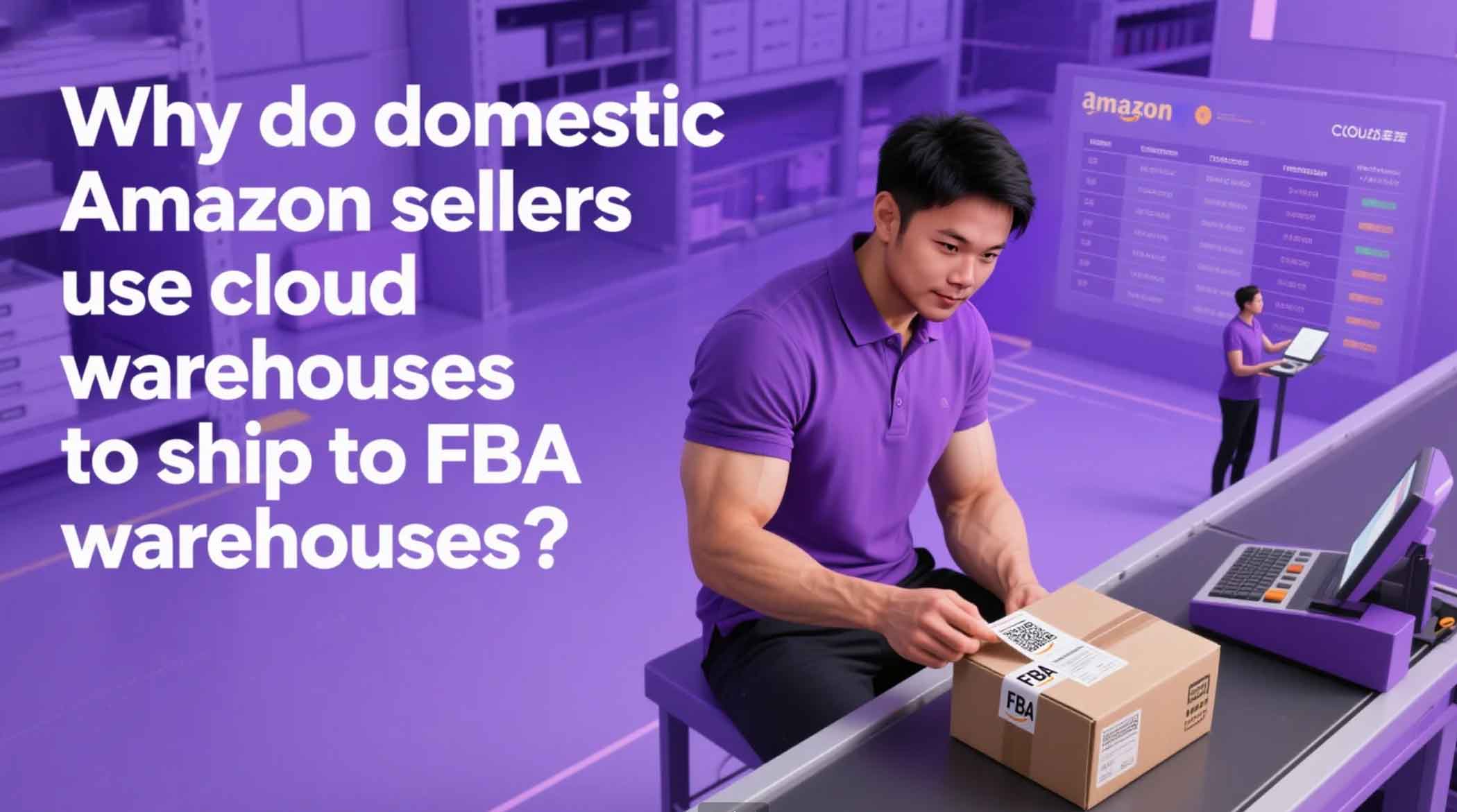
In the operation of cross-border e-commerce, Amazon sellers are no longer unfamiliar with the importance of FBA warehouses. Whether the buyer can receive the goods quickly after placing an order largely depends on whether the seller can smoothly prepare the goods to Amazon's warehouse.
In the past, many sellers chose to directly operate the shipment themselves, but with the upgrading of platform rules and the improvement of logistics requirements, more and more sellers are turning their attention to cloud warehouse services, using cloud warehouses to complete the first leg stocking and posting operations to FBA warehouses.
1: The troubles of FBA first leg and order placement
Although Amazon's FBA service can help sellers solve the problem of final delivery, sellers still have to face a series of details in the first leg transportation.
For example, how to efficiently store goods in the warehouse? Does FBA labeling meet Amazon's requirements? How to prepare goods in batches under storage capacity limitations? If these issues are not handled properly, it can easily lead to delays in goods entering the warehouse and even rejection by Amazon. During peak season, the logistics pressure and complexity of FBA's first leg make it difficult for many sellers.
2: Cloud warehouse entry simplifies FBA stocking process
Many domestic Amazon sellers have started using cloud warehouse service providers as a solution for dropshipping. The role of cloud warehouse is to provide sellers with one-stop warehousing and operation services: goods can be first entered into the cloud warehouse, labeled, sorted, and packaged by a professional team, and then sent to FBA warehouse in batches or batches according to platform requirements. In this way, sellers no longer need to worry about tedious details to ensure smooth warehousing of goods.
3: The advantages brought by the cloud warehouse's FBA first leg cargo delivery model
1. Compliance operation: Cloud warehouse staff are familiar with Amazon's warehousing standards and can strictly follow them from box labeling to SKU labeling.
2. Flexible allocation: Inventory is stored in cloud warehouses and can be dynamically adjusted based on sales volume to avoid stocking up too much at once.
3. More stable delivery time: Diversified first leg channels allow for flexible selection of suitable transportation methods based on peak and off peak seasons.
4. Reduce labor costs: Sellers do not need to build their own warehouses or hire additional personnel, and all operations are completed by the cloud warehouse.
Among numerous cloud warehouses, Taijia Cloud Warehouse provides cross-border sellers with more flexible choices. Its service not only covers Amazon FBA first mile stocking, but also provides 60 days of free warehousing, significantly reducing the initial cost of inventory management.
TakeSend is a one-stop dropshipping service that can cover multiple platforms including Amazon. Sellers can complete order processing and shipping instructions in the same system, greatly improving efficiency. For sellers who operate in different locations or have multi-channel layouts, this model is particularly suitable.
It can be seen that the reason why more and more domestic Amazon sellers choose cloud warehouses to complete FBA stocking is not simply to save time, but rather the comprehensive advantages of the cloud warehouse model in compliance, efficiency, and cost control.
SERVICE
Copyright © 2026 TakeSendShip. All rights reserved


