

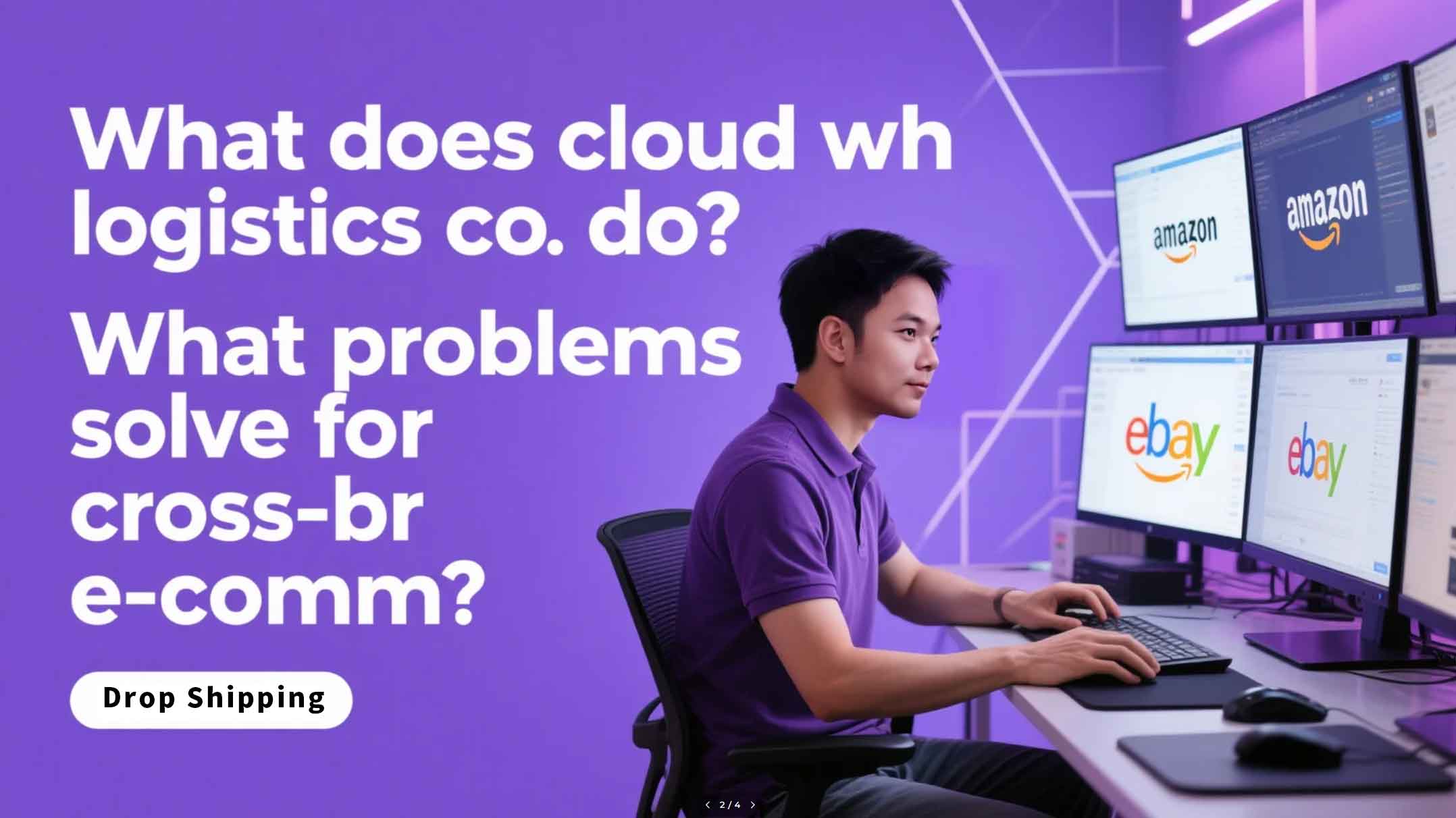
Cross border cloud warehouses, unlike factories or simply international courier companies, play an indispensable role in the e-commerce supply chain. Many novice sellers, when they first hear about a cloud warehouse logistics and warehousing company, often ask: What exactly does it do? What is the difference between traditional warehouses?
Cloud warehouse is an intelligent warehousing and dropshipping service achieved through information systems and automated management. By integrating warehousing, sorting, packaging, labeling, and shipping processes, sellers can achieve automatic order processing and global delivery without the need to build their own warehouses.
1、 The working principle of cloud warehouse logistics
The core of a cloud warehouse is the combination of cloud management and on-site operations. The seller sends the goods to the cloud warehouse in advance, and the system automatically enters information such as SKU, quantity, and storage time to achieve visual inventory management.
After customers place orders on the platform, the cloud warehouse system will automatically receive order instructions and complete actions such as picking, packaging, labeling, weighing, and shipping, with almost no need for seller intervention throughout the process.
This model not only improves delivery efficiency, but also avoids the manual management errors of traditional warehousing. For cross-border sellers, a cloud warehouse is like a sleepless warehouse that operates 24 hours a day, and orders can be shipped immediately upon arrival.
2、 Unlike traditional warehousing that only handles the release of goods, cloud warehouse logistics companies can provide more comprehensive one-stop services, including:
Storage and shelving: Receive goods from sellers, systematically register and store them in different areas.
Inventory management: Automatically count inventory quantity and age, remind sellers to replenish or clear unsold products.
Order processing: The system interfaces with major platforms such as Amazon, Shopee, eBay, AliExpress, etc. to achieve automatic order generation and outbound.
Packaging label: Complete labeling, sealing, reinforcement and other operations according to platform requirements.
Return, exchange, and replenishment management: supports returning items to the warehouse, quality inspection, relisting, and secondary delivery.
These processes require manual completion in traditional self built warehouses, while the systematic management of cloud warehouses greatly improves efficiency.
3、 Why are cross-border sellers increasingly relying on cloud warehouses
For cross-border sellers, the biggest attraction of cloud warehouses is cost savings and improved efficiency.
Previously, sellers had to rent warehouses, hire people to pack, and connect with courier companies themselves. Now, all they need to do is hand over the goods to the cloud warehouse, and the system will automatically process the shipment. Sellers can focus on operations.
At the same time, cloud warehouses can also help solve the problem of multi platform shipping. Many sellers have stores on multiple platforms such as Amazon, eBay, Shopee, etc. Traditional methods are difficult to manage inventory uniformly, while cloud warehouse systems can centrally process orders from different platforms, greatly reducing error rates.
Cloud warehouses can also provide personalized services based on order types, such as package splitting, SKU consolidation for shipping, batch labeling for FBA warehouses, etc., to meet the needs of different e-commerce models.
4、 What changes do cloud warehouse service providers bring to sellers after using cloud warehouse dropshipping services?
1. Light asset operation: No longer need to build warehouses or hire packaging personnel, reducing fixed costs.
2. More efficient shipping: Cloud warehouses are usually equipped with automated equipment and professional operation teams, making outbound shipments faster.
3. More stable delivery time: Cloud warehouse can automatically match logistics channels according to the destination, reducing delays.
4. More transparent data: Inventory, order, and outbound records can be tracked in real-time, facilitating financial accounting and replenishment planning.
Taking TakeSend Cloud Fulfillment as an example, its cloud warehouse services not only cover domestic and overseas warehouses, but also support functions such as dropshipping, multi SKU merging, and single shipment FBA warehouses.
Sellers can enjoy automatic system synchronization, multi platform shipping, and a 60 day free warehousing policy. The entire warehousing and shipping process can be checked online, providing a truly one-stop solution for cross-border business.
Whether it is a start-up foreign trade merchant or a large seller who has already established multiple platforms, choosing a reliable cloud warehouse partner is a crucial step in achieving steady business growth.
SERVICE
Copyright © 2026 TakeSendShip. All rights reserved


