

For many new cross-border e-commerce sellers, how are cloud warehouse fees calculated? It has always been a vague question. Some people are concerned about the high storage costs and complicated warehousing operations, while others are worried about the hidden costs. It is more cost-effective to rent a small warehouse than to ship goods once.
But in fact, with the gradual maturity of cross-border cloud warehouse systems, service models have already become transparent and cost-effective. For example, cross-border warehousing service providers like TakeSend Cloud Fulfillment enable sellers to truly achieve low-cost and efficient warehousing operations through systematic management and tiered billing.
1, The charging logic of cross-border cloud warehouses: billing by link is more flexible
Unlike traditional fixed rent warehouses, cloud warehouses offer more detailed fees and are closer to the actual business model of sellers. For cross-border e-commerce, cloud warehouse fees are generally divided into four parts
1. Storage fees - the cost of occupying space for goods in the warehouse.
2. Operating costs - expenses incurred during processes such as warehousing, shelving, delisting, and outbound.
3. Value added service fees - such as customized operations such as posting, packaging, combining, and unpacking.
4. Packaging material cost - priced separately based on usage.
This segmented billing model allows sellers to pay as needed, without paying for temporarily unused services, and avoids opaque bundled charges.
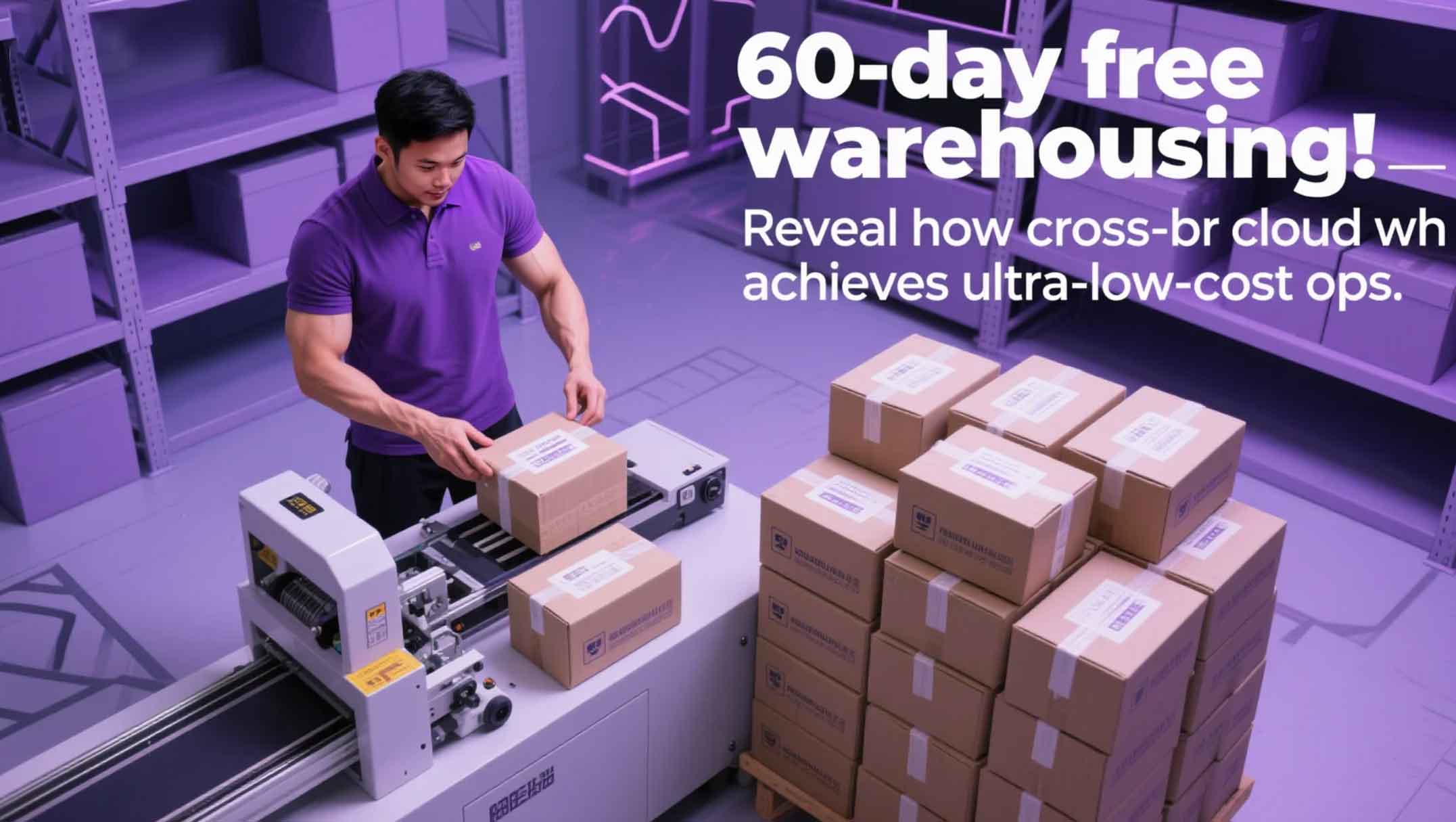
2, Taijia Cloud Warehouse offers 60 days of free storage to reduce the initial pressure on sellers
Among numerous cross-border cloud warehouses, the charging standards of Taijia Cloud Warehouse can be described as industry friendly.
TakeSend provides a 60 day free storage period for all inbound sellers, starting from the day the goods are received and without incurring any storage rent during this period. For sellers who need to stock up in advance and ship in batches, this undoubtedly greatly reduces the pressure of warehousing costs.
After the free period, Taijia Cloud Warehouse charges daily based on the volume of the goods, with transparent storage prices and no additional fees. Sellers can view inventory age, inventory proportion, and expense details in the background at any time, and bills can be checked in real-time to avoid confusion in later accounts.
3, Clear and transparent operating costs: as low as 1 yuan for outbound shipments
In terms of cloud warehouse operations, Taijia Cloud Warehouse implements standardized pricing:
Storage processing: Free, including quality inspection, shelving, and system registration.
Outbound operation: The first piece costs 1 yuan per piece, and the subsequent piece costs 0.3 yuan per piece.
Consolidation, splitting, and labeling of packages: as low as 0.5 yuan per piece.
Packaging materials: Charged at cost price without additional charges.
This price structure is particularly friendly to small and medium-sized sellers. Whether it is single item shipping or multi SKU combined shipping, it can effectively control the cost of outbound. Even during peak seasons, the warehouse can maintain stable operational efficiency through automated systems, ensuring that packages are shipped out within the specified time.
4, Value added services: high efficiency behind low costs
Taijia Cloud Warehouse not only has an advantage in price, but also achieves refined management in service details.
The warehouse supports automatic docking of orders from multiple platforms (such as Amazon, Shopee, AliExpress, eBay, Walmart, etc.), and the system can automatically identify order types and SKUs to avoid manual errors.
For sellers who require special operations, such as FBA cargo sorting and labeling.
Multi platform order package delivery.
Return, label exchange, and secondary shipment.
Product photography and quality inspection records.
Cloud warehouses can also provide one-stop value-added services, with transparent fees that can be viewed within the system.
Many sellers naturally have concerns when they see low prices, fearing that low prices mean reduced service. But in cloud warehouse systems, low costs often come from the operational advantages of automation and systematization.
Taijia Cloud Warehouse manages the inbound and outbound of goods through an intelligent warehousing system (WMS), which scans and tracks the entire process to reduce manual errors. Simultaneously collaborating with multiple warehouses to shorten the delivery path and increase efficiency.
Therefore, TakeSend's extremely low warehousing costs do not mean lowering service standards, but rather compressing unnecessary intermediate costs through high efficiency.
SERVICE
Copyright © 2026 TakeSendShip. All rights reserved


