

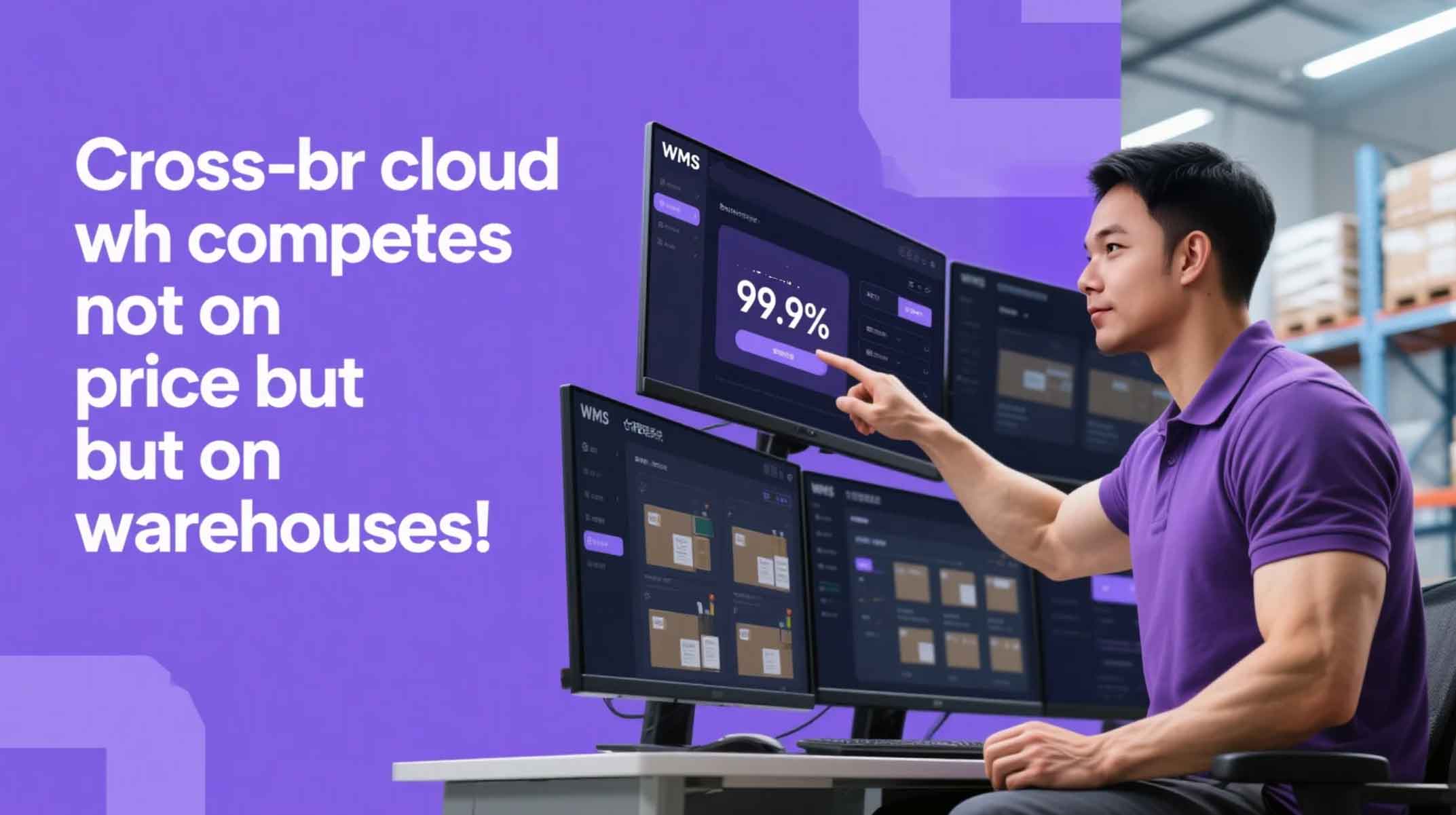
In cross-border e-commerce circles, when people talk about cloud warehouses, their first reaction is often the price. It seems that everyone is competing to see who has lower storage fees and cheaper packaging fees, which means who is more cost-effective.
Sellers who have truly delved into cloud warehouse operations know that the key to determining the reliability of a cloud warehouse is never the price, but the storage facilities themselves.
For cross-border sellers, warehouses are not just places for storing goods, but also the hub of the entire supply chain. The storage conditions, packaging equipment, sorting system, and information management level all directly affect the delivery speed, inventory accuracy, and even the buyer's receiving experience. Those seemingly low-priced cloud warehouses, if their storage facilities are outdated and their operations are chaotic, may ultimately lose more than they gain.
1,Storage facilities determine the delivery speed
The two most feared things for cross-border sellers are order delays and sending the wrong goods. The root of these problems often lies not in the employees, but in the warehouse itself.
Modern cloud warehouses will adopt automatic sorting systems, electronic weighing equipment, and barcode scanning technology to make package inbound and outbound more efficient.
Especially during promotional seasons or peak FBA restocking periods, well-equipped warehousing facilities can significantly improve shipping speed and reduce downtime. However, warehouses with outdated facilities rely heavily on manual operations, which can lead to errors and stacking of goods, resulting in a decline in seller ratings.
2,A good storage environment makes goods safer
Many cross-border sellers are concerned about issues such as moisture, packaging damage, and SKU confusion when using cloud warehouses. In fact, these risks are often closely related to the storage environment.
Professional cloud warehouses are usually equipped with facilities such as constant temperature, moisture resistance, dust prevention, and shock resistance. They have scientific shelf layout and zoning management, which can effectively reduce cargo damage.
For high-value electronic products and clothing goods, the quality of the storage environment even determines whether the goods can be delivered to buyers intact and undamaged.
3,Intelligent warehousing system makes management more transparent
Nowadays, cross-border cloud warehouses are no longer just storage yards, but intelligent information management centers. Advanced warehousing systems can automatically record data such as inbound, outbound, SKU sorting, etc., achieving real-time visual management.
Sellers no longer need to manually check inventory, they only need to log in to the system to view inventory dynamics, shipping progress, and cost details. At the same time, the system can also synchronize with ERP and store backend, significantly reducing manual intervention errors and improving order processing accuracy.
4,Taijia Cloud Warehouse improves facilities to create efficient services
Among numerous cross-border cloud warehouse service providers, Taijia Cloud Warehouse has won widespread recognition in the market with its comprehensive warehousing facilities and intelligent systems.
The storage area exceeds 1000 square meters, and the internal system adopts zoning management and automatic sorting. The goods are stored, shelved, packaged, labeled, and released in an integrated manner.
Simultaneously equipped with electronic weighing, QR code recognition, standardized operation platform and other equipment, greatly improving operational efficiency.
Taijia Cloud Warehouse's system can seamlessly integrate with multi platform ERP systems, synchronize inventory information in real-time, and adapt to mainstream cross-border platforms such as Amazon, Shopee, AliExpress, Walmart, eBay, etc.
For multi platform sellers, this means that shipping data is automatically uploaded, shipping is more accurate, and inventory is more transparent.
Price determines the starting point, but facilities determine the long-term.
The true low cost does not depend on how low the warehouse rent is, but on how much return it can bring in terms of shipping efficiency, accuracy, and inventory turnover.
SERVICE
Copyright © 2026 TakeSendShip. All rights reserved


