

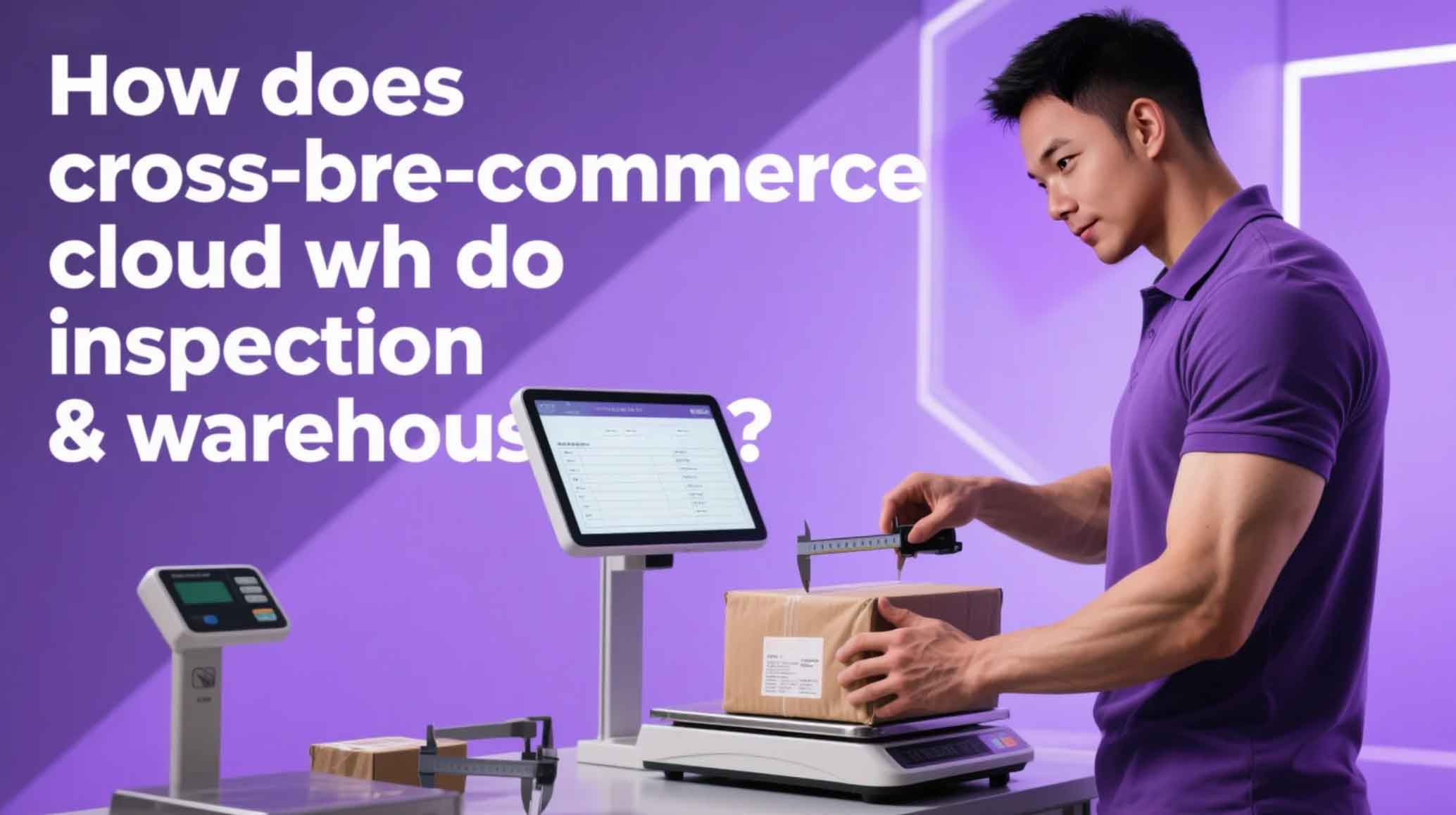
For cross-border e-commerce sellers, warehouse management is no longer a simple "stacking" problem, but a systematic and refined operational process.
In the cross-border e-commerce cloud warehouse model, every step from the moment the goods arrive at the warehouse - unloading, verification, inspection, and shelving - directly affects the subsequent delivery speed and accuracy.
Many new sellers who have joined cloud warehouses often only focus on shipping efficiency. In fact, a standardized and regulated warehousing process is the foundation for ensuring stable and efficient processing of subsequent orders.
Below, taking a typical cross-border e-commerce cloud warehouse operation as an example, we will take you to understand the complete warehousing service process.
1, Unloading: The First Step of Safety and Standardization
After the seller's goods arrive at the cloud warehouse, unloading is the first step. The warehouse staff will confirm the truck, item number, and arrival time based on the warehouse reservation information, and complete unloading in the designated area.
Professional cloud warehouses are usually equipped with loading and unloading equipment and partitioned unloading areas to ensure that goods from different customers are not mixed or mistakenly entered.
At this stage, warehouse personnel will conduct a preliminary inspection to ensure that the outer packaging is intact. If any damage or abnormal quantity is found, it will be immediately recorded and reported to the seller.
This process may seem simple, but it is an essential security checkpoint that cannot be ignored in the entire cross-border e-commerce cloud warehouse operation.
2, Verify weight and quantity: ensure data consistency
After unloading the goods, enter the verification stage. The warehouse staff will check the weight, volume, quantity and other data one by one based on the packing list provided by the seller.
This step is an important step in ensuring accurate inventory. Any missed scanning, incorrect counting, or incorrect registration of an item will result in inventory deviation and affect subsequent outbound shipments.
Some cross-border e-commerce cloud warehouses are even equipped with electronic weighing systems and automatic scanning devices, which can quickly input information through barcode recognition, improving accuracy and work efficiency.
A standardized verification process can not only reduce human errors, but also detect problems in a timely manner before storage, saving sellers the trouble of subsequent processing.
3,Checking SKU tags: Ensuring product identification from the source
After completing the verification, the warehouse will conduct SKU label inspection on the goods. This step aims to ensure that each product corresponds one-to-one with the SKU information in the system.
Warehouse personnel will check the position, clarity, and matching of the labels to ensure accurate scanning during storage.
If any label errors, missing or duplicate are found, the warehouse will assist the seller in reprinting and posting to avoid confusion in the subsequent shipping process. The importance of label inspection is self-evident, as an SKU error can lead to incorrect order delivery and even platform penalties.
4,Inventory and shelving: combination of digitization and intelligence
After completing the inspection, the goods officially enter the stage of storage and shelving. The staff will place the goods in the designated area according to the assigned location number in the system and update the inventory status synchronously in the system.
The modern cross-border e-commerce cloud warehouse adopts an intelligent warehousing system (WMS), which can achieve automatic partitioning, real-time visualization of inventory, and tracking of inventory age and other functions.
This not only facilitates sellers to view real-time inventory, but also provides accurate data support for subsequent outbound and restocking.
At the same time, products of different categories will be allocated to different storage areas, such as fragile areas, heavy cargo areas, small item areas, etc. Scientific shelving planning enables the warehouse to maintain a fast pace of outbound during peak periods.
Among cross-border cloud warehouse service providers, Taijia Cloud Warehouse warehousing services include unloading, weight and quantity verification, 5KU label inspection, shelving and warehousing, and other complete processes to ensure that each batch of goods can be safely, accurately, and quickly stored in the warehouse.
At the same time, we also provide dropshipping and multi platform order synchronization services, covering international express delivery, international dedicated lines, international postal services, FBA first leg and other channels.
Sellers do not need to build their own warehouses to enjoy one-stop services from domestic warehousing to overseas shipping, with easy operation and fast delivery time.
The competition in cross-border e-commerce has never been a competition in a single link. When unloading, checking, inspecting, and warehousing can all be digitized, the accuracy and speed of shipping naturally come naturally.
SERVICE
Copyright © 2026 TakeSendShip. All rights reserved


