

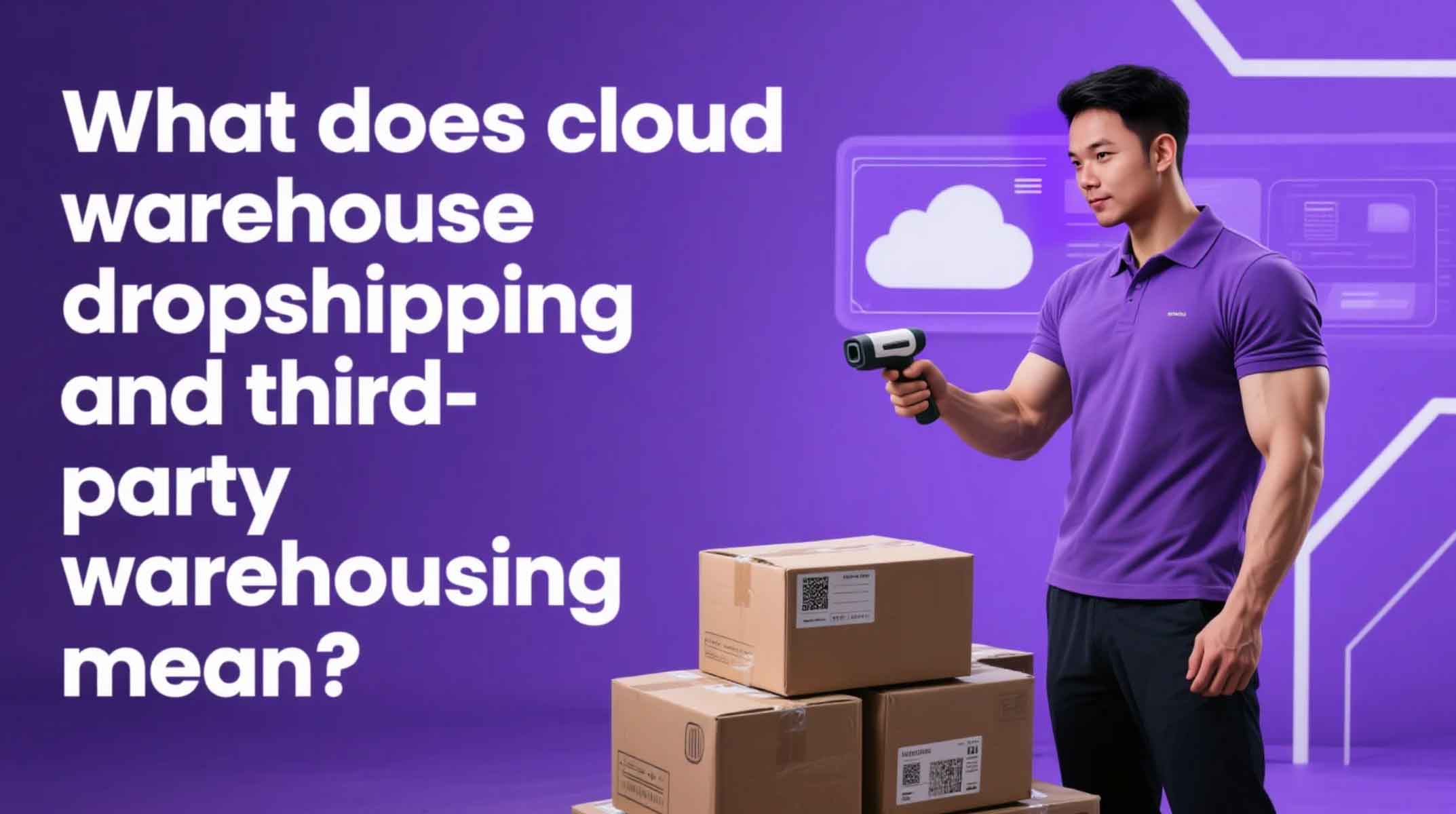
With the continuous development of cross-border e-commerce, more and more sellers are paying attention to warehousing and shipping efficiency. In the past, most sellers often chose to build their own warehouses or rely on platform self operated warehouses, such as Amazon FBA. Now, the model of cloud warehouse outsourcing and third-party warehousing is gradually becoming mainstream.
For novice sellers, cloud warehousing and third-party warehousing may sound complicated, but its core logic is actually simple - leaving warehousing and shipping to professional institutions, allowing sellers to focus only on sales and operations.
1, Third party warehousing: Seller's shared warehouse
Third party warehousing refers to sellers no longer building their own warehouses, but renting warehouse space and services from professional warehousing service providers. These service providers typically have complete warehouse management systems, sorting and packaging teams, and logistics channels, providing one-stop solutions for different types of cross-border sellers.
The model is similar to a shared warehouse, where sellers do not have to bear high rental, labor, and equipment costs, but only need to pay based on usage. For small and medium-sized sellers, the greatest value of third-party warehousing lies in reducing barriers to entry.
Before, if you wanted to do cross-border e-commerce, you had to first have a warehouse, a team, and a packaging area. Now, just send the goods to the cloud warehouse, and all subsequent steps can be completed by a third party.
2, Cloud warehouse dropshipping is an upgraded form of third-party warehousing.
Traditional warehousing focuses on inventory, while cloud warehouse outsourcing emphasizes shipment. It is not only responsible for storing goods, but also undertakes the entire process of order processing, packaging, labeling, and shipping.
The cloud warehouse system will interface with the seller's store or ERP in real-time. Once the customer places an order, the warehouse system will automatically receive the order and complete the outbound process. Sellers do not need to manually operate, they only need to check the shipping status feedback from the system.
The advantage of this model lies in efficiency and accuracy. The automation system reduces human errors, and warehouse personnel only need to operate according to system instructions, with the entire process from receiving orders to shipping traceable. For cross-border sellers who pursue timeliness and standardized operations, cloud warehouse dropshipping is an efficient and stable choice.
3, What can third-party cloud warehouses bring to cross-border sellers
Cross border e-commerce sellers usually choose third-party cloud warehouses for the following reasons:
1. Lower cost, no need to build a self built warehouse, no need to hire packaging personnel, storage fees are settled on demand, saving fixed expenses.
2. Faster operation, high degree of automation in cloud warehouse system, able to quickly respond to orders from multiple platforms, and achieve one piece dropshipping.
3. Management is more worry free, with real-time synchronization of inventory data, allowing sellers to view inventory, order, and logistics information at any time.
4. Shipping is more stable, and third-party cloud warehouses usually cooperate with multiple logistics channels to intelligently match shipping methods based on destination and cargo attributes, reducing the risk of delays.
Therefore, for cross-border sellers, third-party cloud warehouses are not only warehouses, but also a part of logistics and supply chain management. It allows small teams to enjoy the warehousing capabilities of large enterprises.
4,Third party cloud warehouses are efficiency accelerators for cross-border sellers
Cloud warehouse outsourcing third-party warehousing sounds like an industry term, essentially solving the most practical problem - how to ship goods more efficiently and economically.
In the fierce competition of cross-border e-commerce, delivery speed, inventory accuracy, and cost control have become the key factors determining success or failure.
SERVICE
Copyright © 2026 TakeSendShip. All rights reserved


